Today we did a acrostic poem about pari haka, Here is mine
Parihaka Poem
(1 words for each letter, beginning with the same letter)
P ositive
A dditude
R espect
I nhumane
H arrassment
A rmy
K illing
A wful
Today we did a acrostic poem about pari haka, Here is mine
Parihaka Poem
(1 words for each letter, beginning with the same letter)
P ositive
A dditude
R espect
I nhumane
H arrassment
A rmy
K illing
A wful
Gravity
Read, then answer
What Is Gravity?
Gravity is the force by which a planet or other body draws objects toward its center. The force of gravity keeps all of the planets in orbit around the sun.
What keeps all of the planets in orbit around the sun?
Gravity is the force by which a planet or other body draws objects toward its center. The force of gravity keeps all of the planets in orbit around the sun.
Why do you land on the ground when you jump up instead of floating off into space? Why do things fall down when you throw them or drop them? The answer is gravity: an invisible force that pulls objects toward each other. Earth's gravity is what keeps you on the ground and what makes things fall.
Define gravity in one sentence]
Use gravity in a sentence. Gravity is why this fruit falls to the ground. Licensed from iStockPhoto. noun. The definition of gravity is the force that causes everything that goes up to fall back down to Earth or is a word used to describe seriousness.
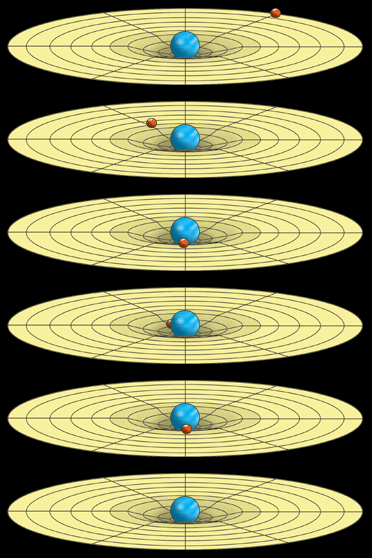
An animation of gravity at work. Albert Einstein described gravity as a curve in space that wraps around an object—such as a star or a planet. If another object is nearby, it is pulled into the curve. Image credit: NASA
Anything that has mass also has gravity. Objects with more mass have more gravity. Gravity also gets weaker with distance. So, the closer objects are to each other, the stronger their gravitational pull is.
What makes gravity weaker?
Earth's gravity comes from all its mass. All its mass makes a combined gravitational pull on all the mass in your body. That's what gives you weight. And if you were on a planet with less mass than Earth, you would weigh less than you do here.
What does Earth’s gravity come from?
Earth's gravity comes from all its mass. All its mass makes a combined gravitational pull on all the mass in your body. That's what gives you weight. And if you were on a planet with less mass than Earth, you would weigh less than you do her
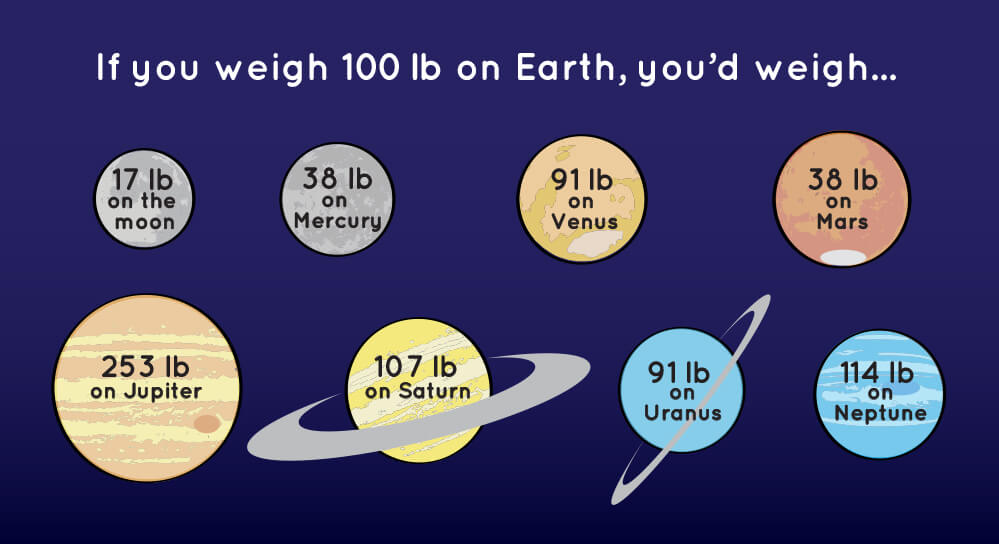
Look at the image below and write how much you’d weigh on the following planets if you weighed 100lbs on Earth.
That's because the planets weigh different amounts, and therefore the force of gravity is different from planet to planet. For example, if you weigh 100 pounds on Earth, you would weigh only 38 pounds on Mercury.
Jupiter 253 lbs Mars 38 lbs
Saturn 107 lbs Neptune 114 lbs
How much would you weigh on the moon? 17 lbs
Image credit: NASA
You exert the same gravitational force on Earth that it does on you. But because Earth is so much more massive than you, your force doesn’t really have an effect on our planet.
7. Why doesn’t your force really have much effect on Earth?
Earth's gravity comes from all its mass. All its mass makes a combined gravitational pull on all the mass in your body. ... But because Earth is so much more massive than you, your force doesn't really have an effect on our planet
Gravity is what holds the planets in orbit around the sun and what keeps the moon in orbit around Earth. The gravitational pull of the moon pulls the seas towards it, causing the ocean tides. Gravity creates stars and planets by pulling together the material from which they are made.
8. What causes ocean tides? In 1687, Sir Isaac Newton explained that ocean tides result from the gravitational attraction of the sun and moon on the oceans of the earth (Sumich, J.L., 1996). ... Based on its mass, the sun's gravitational attraction to the Earth is more than 177.
9. How does gravity create stars and planets?
Gravity not only pulls on mass but also on light. Albert Einstein discovered this principle. If you shine a flashlight upwards, the light will grow imperceptibly redder as gravity pulls it. You can't see the change with your eyes, but scientists can measure it.
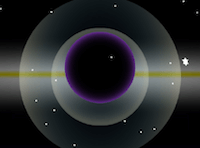
Black holes pack so much mass into such a small volume that their gravity is strong enough to keep anything, even light, from escaping.
10. Why is gravity in black holes so strong that it keeps anything (even light) from escaping?
The gravitational pull of a black hole is so strong that nothing, not even light, can escape once it gets too close. ... As black holes gobble up the matter in their surroundings, they also spit out powerful jets of hot plasma containing electrons and positrons, the antimatter equivalent of electrons
Watch this video to find out more about these areas of immense gravity!
Gravity is very important to us. We could not live on Earth without it. The sun's gravity keeps Earth in orbit around it, keeping us at a comfortable distance to enjoy the sun's light and warmth. It holds down our atmosphere and the air we need to breathe. Gravity is what holds our world together.
11. What is the role of the sun’s gravity?
The sun's gravity keeps Earth in orbit around it, keeping us at a comfortable distance to enjoy the sun's light and warmth. It holds down our atmosphere and the air we need to breath. Gravity is what holds our world together.
12. Can humans live without gravity?
13. Describe where Gravity in Earth is slightly stronger.
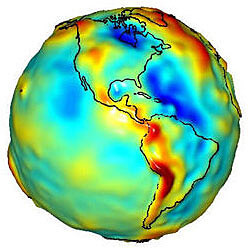
Gravity isn’t the same everywhere on Earth. Gravity is slightly stronger over places with more mass underground than over places with less mass. NASA uses two spacecraft to measure these variations in Earth’s gravity. These spacecraft are part of the Gravity Recovery and Climate Experiment (GRACE) mission.
The sun's gravity keeps Earth in orbit around it, keeping us at a comfortable distance to enjoy the sun's light and warmth. It holds down our atmosphere and the air we need to breath. Gravity is what holds our world together.
The GRACE mission helps scientists to create maps of gravity variations on Earth. Areas in blue have slightly weaker gravity and areas in red have slightly stronger gravity. Image credit: NASA/University of Texas Center for Space Research
GRACE detects tiny changes in gravity over time. These changes have revealed important details about our planet. For example, GRACE monitors changes in sea level and can detect changes in Earth’s crust brought on by earthquakes.
14. List 2 things that the GRACE mission can do for Earth.
GRACE-FO will continue to monitor Earth's gravity and climate. The mission will track gravitational changes in global sea levels, glaciers, and ice sheets, as well as large lake and river water levels, and soil moisture.
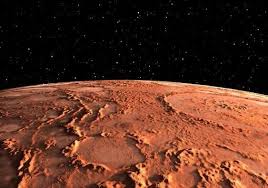
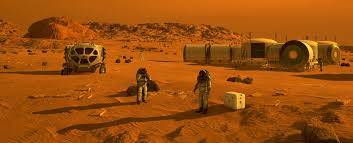
15. Gravity on Mars
List 5 or more facts about GRAVITY ON MARS in the space below. You can copy and paste and add images. Save in your Hurumanu 3 File.
What ones are you happy with?
-I am happy with my beep test result because i have improved in my beep test since last year
-no so happy with the fact that in pe we don't do pe we do maths
i am feeling fit
I will try in the parts that i dont like to do such as maths